Working 9-5
Paying a mortgage
Unfortunately I don’t seem to be able to be in the right head-space for haiku while participating in the grind of modern life, so I’m putting my site back hiatus, and hoping for better times to come ~
English language haiku & Australia
Working 9-5
Paying a mortgage
Unfortunately I don’t seem to be able to be in the right head-space for haiku while participating in the grind of modern life, so I’m putting my site back hiatus, and hoping for better times to come ~
Today is the Invasion Day / Australia Day public holiday here in Australia. I acknowledge the Wurundjeri people of the Kulin Nation, on whose unceded land I was born, and live, and work, and write this post today.
Now, continuing a couple of the mid-summer themes from my recent posts:
      dusk clouds
 crepe myrtle flowers
      in the gutter
Today the forecast was for 42 degrees celsius here in Naarm / Melbourne. The atmosphere is charged, there’s muted thunder, but so far, today at least, no rain.
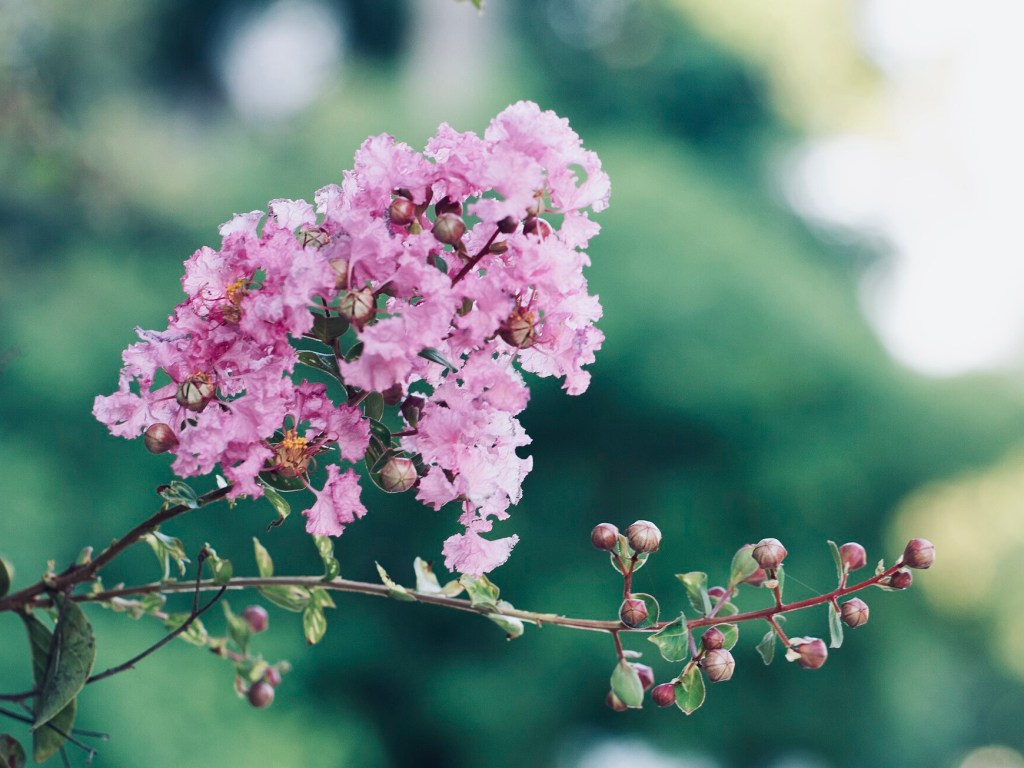
As I drove my daughter to her Pilates class this morning, we saw lots of crepe myrtle trees, in Flemington, and Ascot Vale, still in bloom. Crepe myrtles are “exotics”, not Australian natives. Most crepe myrtles are . . . blatantly . . . magenta, but a few have, rather attractive, dull pink flowers. Are these a different species? Dying? Faded by recent rain?
In the streets with lots of these trees there are banks, drifts, of crepe myrtle flowers in the gutters, blown down by high winds that preceded our summer storms
or
brought down
by
heavy
rain.
Note, added 4th February, 2025:
The dull pink and the magenta are definitely different varieties of crepe myrtle, because I’ve now seen them growing next to each other in the same street. There are also quite a few “off white” and pale purple crepe myrtles, in West Footscray, where I was today.
It’s the second week of January and I’ve just got back from a week spent at a caravan park, in Porepunkah, in the Ovens Valley, three hours north of Naarm / Melbourne.
Bursaria spinosa, sometimes called “Christmas bush”, or “blackthorn” (or “spiny box”, or “mock orange”) was in flower everywhere up there. These common names for the plant are not really that useful, because there seem to be dozens of different plants called “mock orange”, “box”, and “blackthorn”.
The bursaria have beautiful, pale yellow flowers, or actually, if you look at them closely, you’ll find the flowers are white, and the flower stems are slightly yellow. This gives the impression the flowers are a pale, moonlight yellow, as you speed past them in your car.
My sister-in-law Claire, who has a degree in botany, and a grad dip in horticulture, tells me that the bursaria will soon, also have red seed-pods (purse-shaped, hence the “bursaria” name). The colours white, green and red are associated with Christmas, so I assume this is why bursaria is called a “Christmas bush”. The only problem that, this year at least, the colours will be displayed way too late for Christmas. Oh, and, as I mentioned earlier, the flowers appear to be pale yellow, rather than snow white.
Other interesting information about busaria is available at various sites on the internet. If you crush busaria leaves in water, and stand the container outside, the water will turn bright blue. This is because the leaves release aesculin, which reacts with ultraviolet light (the trick does not work indoors because there’s insufficient ultraviolet light). Aesulin can be combined with agar and bile salts to make a test where you can culture various kinds of bacteria.
Happy (late) Christmas.
      moonlight
 during the day
      busaria
PS. The other small trees that were in full bloom in the Ovens Valley were crepe myrtles. Unlike the busaria the crepe myrtles have vivid, almost painfully vivid, magenta flowers. In Myrtleford, just north of Porepunkah, they have planted thousands, and thousands, of crepe myrtles (seemingly to the exclusion of all other plants) and the whole town was . . . blindingly magenta.

     no epiphany –
just flowering gums
     and radiata pine
I saw the first flowering gum trees coming into bloom two days before Christmas, so I guess you could consider flowering gums one of the kinds of Christmas tree here in Naarm / Melbourne.
Some flowering gums have vivid orange flowers, others deep red flowers like a second coming of the scarlet bottlebrush (the bottlebrushes finished flowering a month or so ago).
The flowering gums looked wonderful for the week between Christmas and New Year but now we’ve had some days of very heavy summer rain, crushing the flowers so now they are no longer at their best . . .
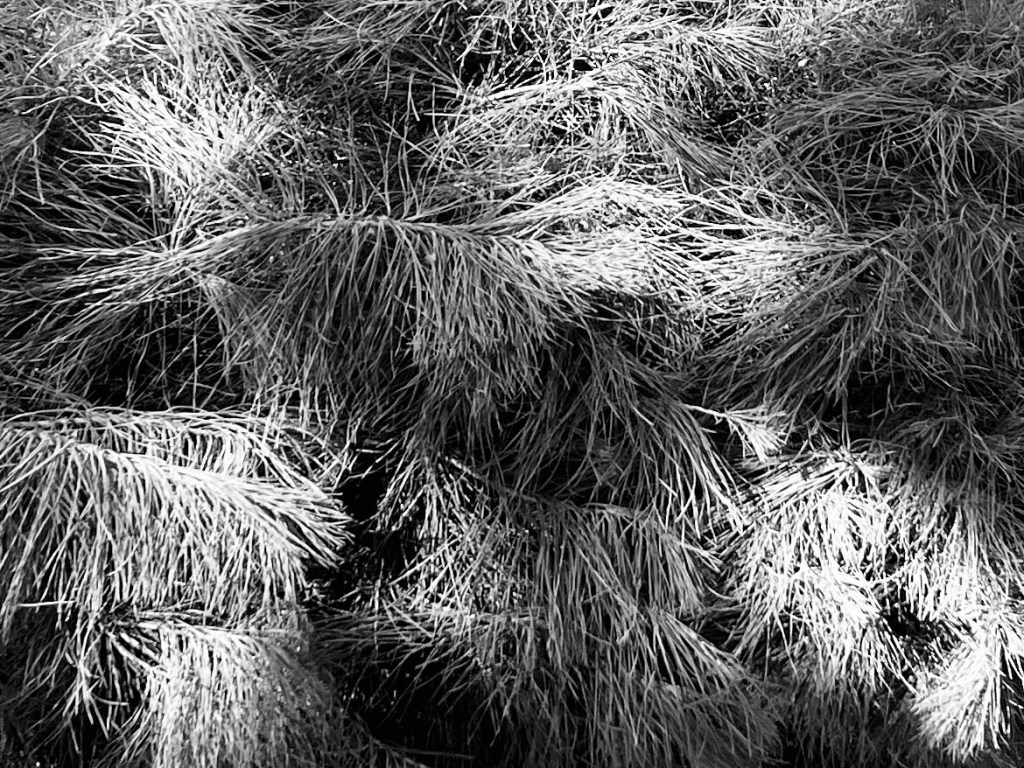
. . . and now? Now we’ve reached Twelfth Night (the 6th of January), also known at Epiphany, when the Three Magi are said to have visited the baby Jesus. Christmas decorations are taken down. The dried out radiata pines, that many families use as Christmas trees, are left out on the footpaths and nature-strips to be taken away as “green waste”.
Speaking of summer rain, rain that comes in hot weather seems to have very different qualities to rain that falls at cooler times of year. I know that “spring rain” is used as a kigo (seasonal key word) in Japanese haiku, but here in Naarm / Melbourne it seems to be summer rain and summer thunderstorms that are most distinctive.
This week Dick Whyte, who posts as Daily Haikai on Bluesky (@dailyhaikai.bsky.social), posted his translation of a haiku by Issa:
      this morning
 hanging in the pines,
      third moon
Dick went on to say:
“Please feel welcome to cap the hokku to make a tan’renga, reply in haiku, or use the ‘crescent moon’ (i.e. third-day-moon) as a prompt!”
I’ve tried to “cap” the haiku in sort of whimsical manner, to try to be true to Issa’s original:
      already fallen
 from the branches –
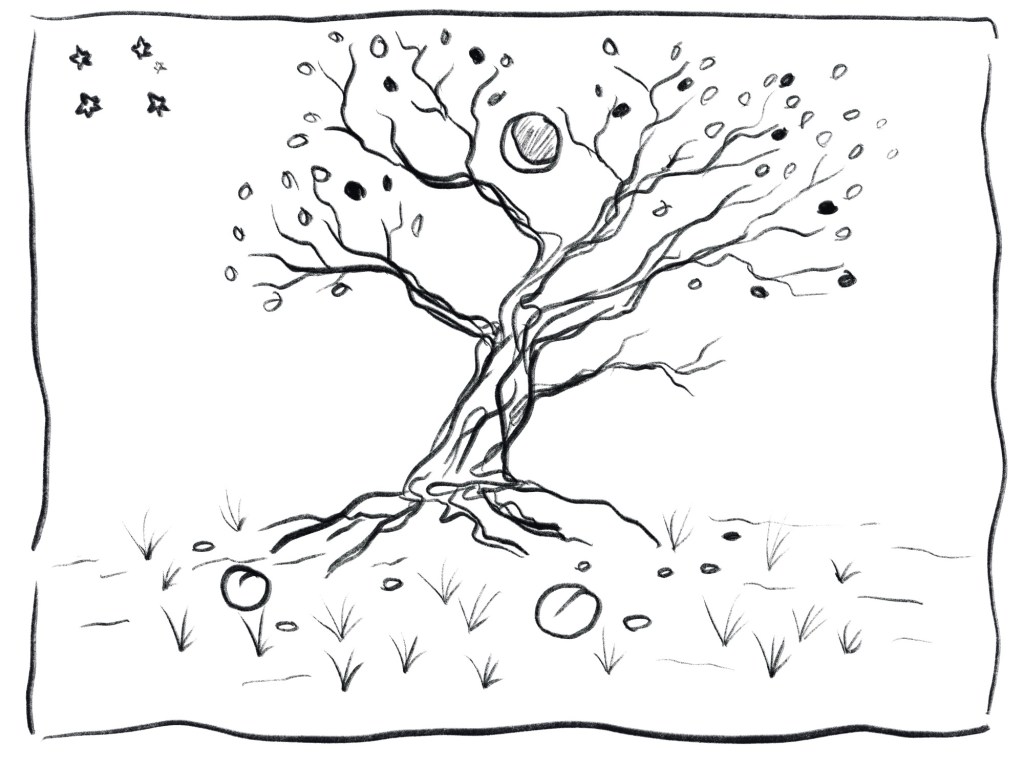
      two other moons
I must be lonely I guess, because two days in row I’ve written haiku about silence, and it’s true that I’ve been living a very solitary life lately.
Almost all of my friends have dropped away from me, one way and another, and I seem to have completely lost the knack of making new friends . . . I’ve heard this situation is pretty common for “middle-aged” men.
But enough of my self-pity, and on to the slightly more inspiring subject of this post – the Southern Cross and the Eureka Flag.
This week marked 170 years since the battle at the Eureka Stockade in Ballarat (3rd of December, 1854), when gold miners revolted against the soldiers and police of newly established Colony of Victoria.
The Eureka Flag (pictured below), is the flag the miners fought beneath, and it depicts the constellation of the Southern Cross. It is a complex and potent symbol in Australian culture: it may be taken to represent colonial Australia developing its own identity in opposition to British authority; and more generally as a symbol of resistance against oppression and authoritarianism; and for many the flag embodies an anti-authoritarian temperament that is seen as distinctly Australian.
The Southern Cross, with five stars, is often used to represents Australia, and of course it features on the current Australian flag. The Southern Cross with four stars represents Aotearoa. Why? I seem to remember someone telling me when I was young, that the fifth star of the Southern Cross, Epsilon, is visible from Australia, but not from New Zealand.
170 years later the Eureka flag is still a common sight in Victoria. It is used by Australian unions and is frequently seen at protests, and flying from cranes on buildings sites.
On a far less positive note, extreme nationalists and white-supremacists have tried to make use of the Eureka Flag to promote their xenophobia.
The word “eureka” is taken from the Greek, meaning something like “I’ve found it!” It is apparently what Archimedes said, when he was getting into a bath, and suddenly understood the principle of fluid displacement (and then, according to the legend, in his excitement, he ran naked through the streets of Syracuse).
The Eureka Stockade in Ballarat, where the miners fought the colonial government soldiers and police, was named “Eureka” because it was near the Eureka Mine (“eureka” being something you might shout if you struck gold).
And so “eureka” may be taken as something like an epiphany, a moment of inspiration or clarity . . . something like what haiku writers describe as a “haiku moment”.
      eureka . . .!
 a moment of clarity
      silent stars

Today I took my cavoodle, Barney, for a run at Holland Park in Kensington, and saw that one of the small flame trees planted there had started come into bloom – just a single spray of flowers so far.
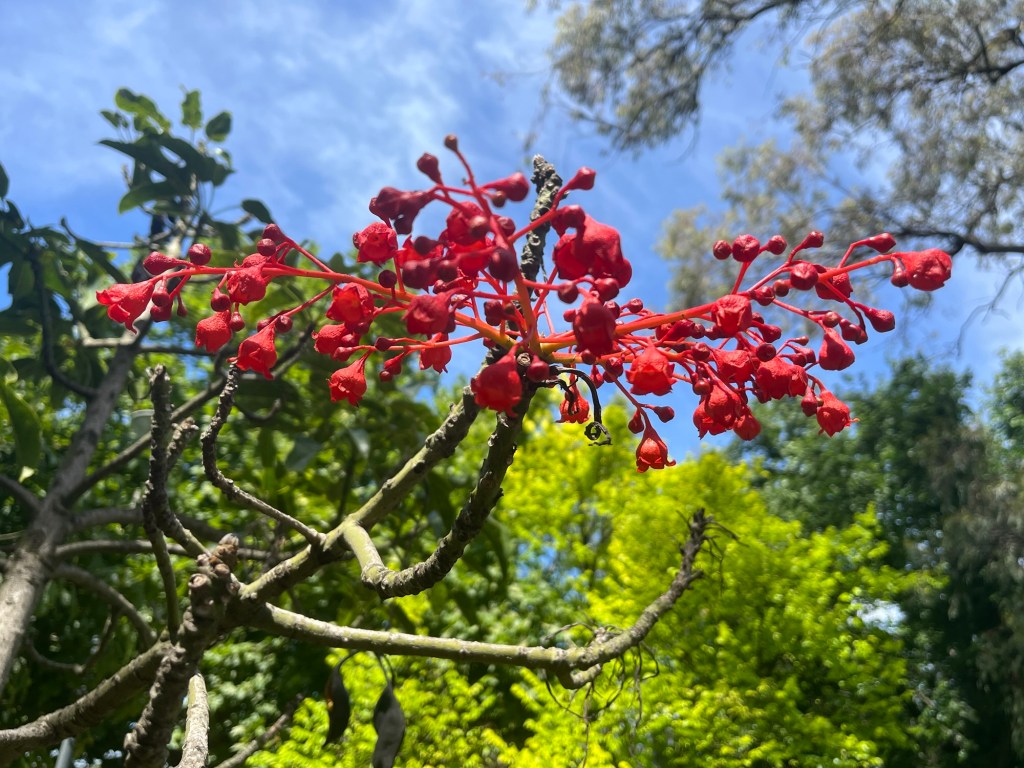
Flame trees (Brachychiton acerifolius), with their vivid scarlet, bell shaped flowers, were rare in Melbourne (Naarm) a couple of decades ago, in fact I can only ever remember seeing one flame tree in the whole of Melbourne when I was growing up. They are much more frequently planted in Melbourne suburbs these days – I wonder if this has anything to do with the warming climate?
In terms of kigo, for haiku written in South Eastern Australia, flame tree could be taken to represent the very start of summer.
Note: For those who are not immersed in the culture and traditions of haiku, a kigo is “key word” used in a haiku, that usually represents a particular season of the year.
Yesterday, 1st December 2024, was both the first day of summer here in the southern hemisphere, and the start of the liturgical season of Advent, the period of waiting and expectancy leading up to Christmas.
I am not a religious person, but my grandfather was a Methodist minister, and I spent the first 16 – 18 years of my life going to church at Holy Trinity in McCracken Street Kensington every Sunday, and because of this I have a fair knowledge of the traditions of Christianity.
When I was growing up every pew was full on Sundays at Holy Trinity. Now the congregation has dwindled away to nothing, and yesterday, on Advent Sunday, my 80 year old father was at a meeting at Wesley Church in Melbourne, to discuss whether the church should sell the Holy Trinity building.
      flame trees
 and an empty church –
      silent bells
Is there anything worse than a poet who explains their own poems, or an artist who explains their own art . . .?
Maybe not, but it can be hard to avoid when it comes to haiku.
Haiku are almost always season specific, and place specific. Plants, animals, and weather patterns vary significantly from country to country, and region to region. If you want readers in other countries to have a chance of appreciating the nuance of your haiku, you often need to explain something the local references you make.
Here for instance is one of my haiku:
      i’ll just wait here
 until the rain stops —
      lemon-scented gum
This haiku was featured on the Echidna Tracks website on Christmas Day 2020, I’ve used it in the Cactus Haiku section of this website, and it was included in the Under the Same Moon: 4th Australian Haiku Anthology.
Many people outside Australia will be familiar with the distinctive smell of eucalypts, either from cleaning products, or from cough lollies, however few, if any, will be familiar with the lemon-scented gum.
The lemon-scented gum, is widely planted as a street tree in Melbourne, Australia (Naarm), and looks like a number of other gum trees, such as the ghost gum, with its smooth white bark. It is, however, unique in that when it’s leaves are crushed, or when it is rained on, the lemon scented gum releases . . . as you may have guessed . . . a distinctive, lemonish aroma.
How could anyone know this association between lemon-scented gums, and the rain, unless they had had it explained, or experienced it for themselves?
Read my other posts on haiku and Australia here.
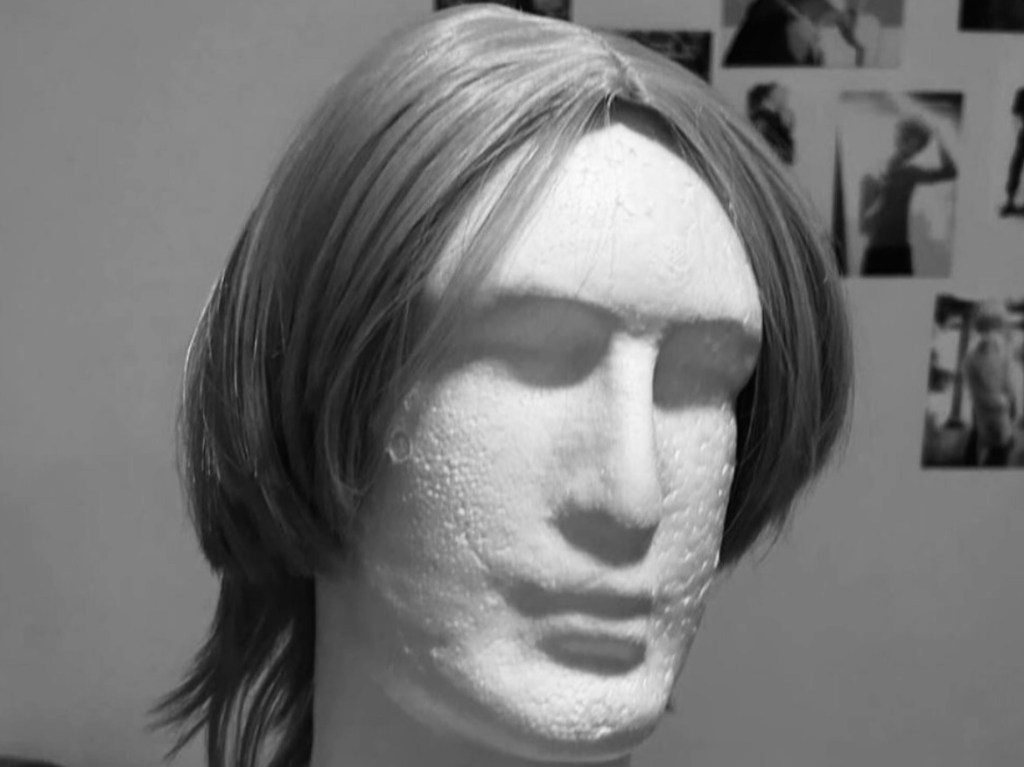
On Bluesky and Instagram I have accounts called “Weird Melbs” where I collate strange things I find for sale on Facebook Marketplace: @weirdmelbs.bsky.social and @weirdmelbs.
A couple of days ago I changed the avatar on these accounts to this hairdresser’s mannequin that I’d found for sale, and under the new image, Karen Smith wrote:
 I see a deep longing
 A constant view
 Too much, too much
So I wrote back:
      the face of one that’s
 seen much suffering is – ah!
      just polystyrene
Which leads me to the topic of senryū.
In the English language haiku community the word haiku is used to mean a short poem that includes a kigo. A kigo is a seasonal reference word, often a bird, flower, or some other natural phenomenon that is specific to one of the seasons in Japan.
In the English language haiku community the word senryū is used to mean a poem that does not have a kigo and refers, often satirically, to aspects of human nature, so my verse about the polystyrene face would be referred to as senryū.
I myself tend to use the word haiku to refer to all of these short verses. Why?
One thing is that senryū is an unfamiliar word to the wider community and insisting on readers learning a new word that is not in common English usage seems . . . didactic.
Another reason is that I don’t think there is an intuitive way for English speakers to say the word senryū, which may embarrass, and potentially exclude, newcomers to English language haiku. Senryū often seems to be pronounced in two syllables with the “r” silent, “sen-yu”.
I admit however that there are a number of contradictions in this position that I choose to take and I’ll address them in an upcoming post.
Also, I should specify my aversion to using the word senryū extends only to communication intended for the wider community. I think it’s fine to use the word in scholarly articles and books intended specifically for people who already know a lot about haiku.
PS. As mentioned in my previous post Karen Smith’s Bluesky account is @karen-smith.bsky.social.
There is a long tradition of people linking a haiku to another haiku written by someone else.
My brother, Problem Child, and I sometimes like to text haiku back and forth between each other.
Each of us will take an element from the other’s previous haiku, and use it as the basis for our next haiku . . .
. . . but my brother lives a busy life, and doesn’t often have the time for haiku . . .
. . . so sometimes I wander social media finding other people’s haiku, or other posts, to respond to with a haiku.
For instance, Karen Smith (@karen-smith.bsky.social), talking about haiku, recently wrote on Bluesky: “If you can write a shopping list you can write poetry”.
My linked haiku:
      a shopping trolly
 full of observations – and
      a cask of merlot
Note: Many purists would describe this short poem as a senryu rather than a haiku – but more of than in my next post.

Nick Raschke is a guitar player, a disability support worker and a photographer of birds.
I first came across his bird photos on Mastodon a year or so ago and I was very pleased to see he has now joined Bluesky – @nickraschke.bsky.social – the social network I now post to most frequently.
Here is a photo Nick posted of a Nankeen Kestrel on 20 December 2022.
My haiku:
      hunting kestrel
 caught
      by your camera
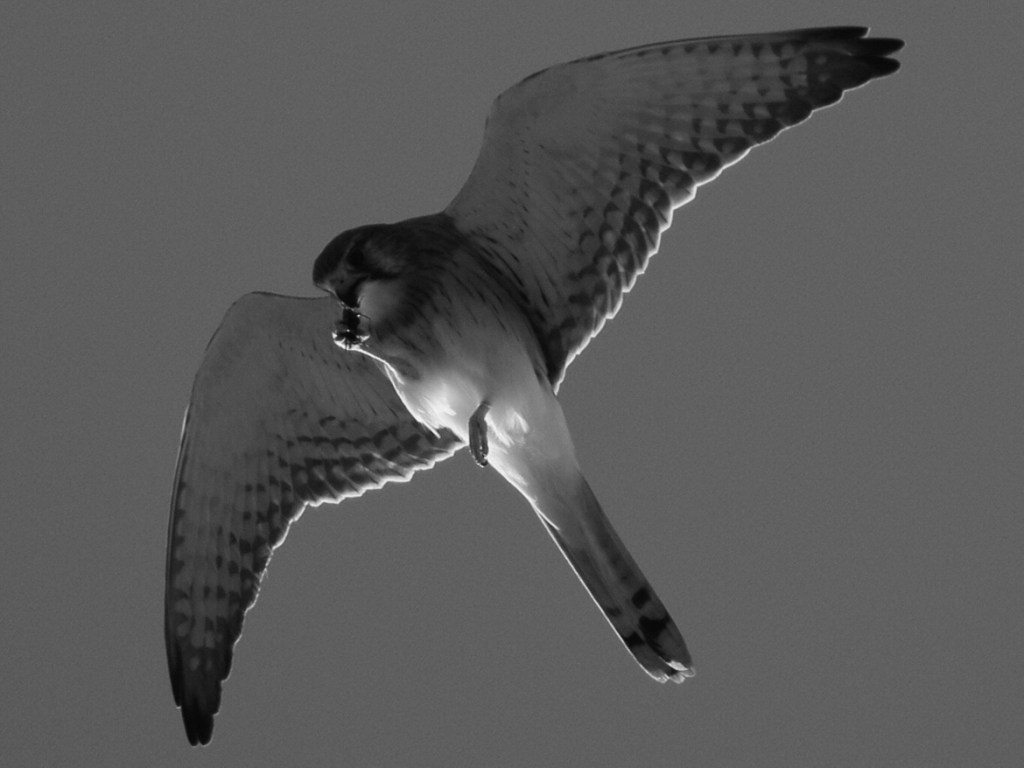
Check out Nick’s Bluesky account – he has a couple of photos of pelicans flying posted there.
      tawny frogmouth –
 i will be here
      long after you are gone
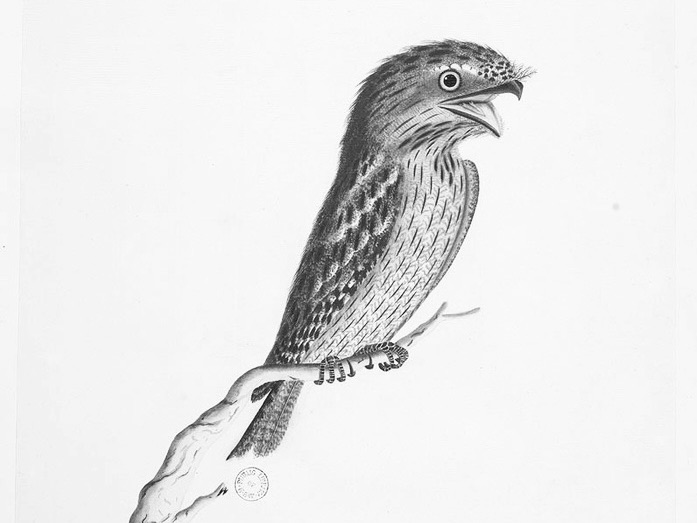
I couple of days ago I came across some photos of Tawny Frogmouths posted on Bluesky by Chris (@leftychris.bsky.social).
They put me in mind of the above Tawny Frogmouth haiku that I wrote in 2021.
I’ve written more about Frogmouths in Part 42 of the Cactus Haiku section of my website, if you are interested.
Note: Originally I posted one of the photos by Chris here but, as there was a lot going in the picture, and it didn’t come up very clearly on small screens, I have replaced it with a picture by the so called Sydney Bird Painter, painted only four or five years after the First Fleet arrived in Australia.
Yesterday I was scrolling through posts on the (fairly) new social media platform Bluesky when I came across a haiku written by Frank J. Tassone:
deep twilight
the wish to sleep like
a wallaby
When I see a haiku on social media I like to try to reply with a haiku of my own, and so:
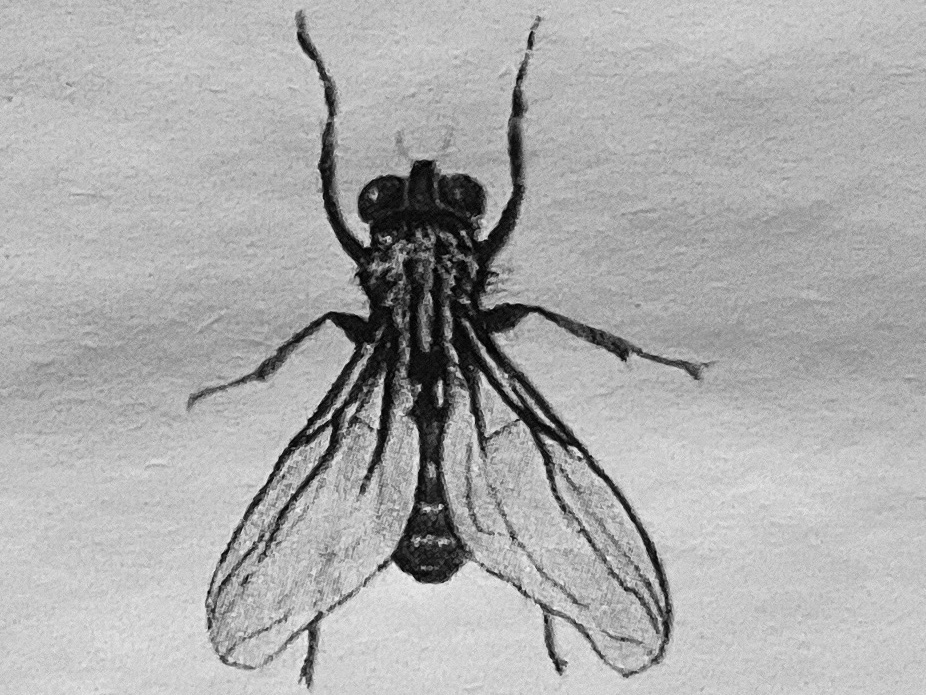
      a drowsy blowfly –
 reading your evening haiku
      in the afternoon
Why a blowfly? Well, up until a couple of weeks ago I hadn’t seen a fly since last summer. Now, if I leave the back door open, one, or several, immediately fly in.
I am a writer and oncology nurse, a non-indigenous Australian living on Wurundjiri Land.
Starting on 11-Nov-2024 I will write brief posts below about Australian and English language haiku poetry.
A more in-depth exploration of Australian symbolism and haiku poetry, which I wrote between 2020 – 2023, can be found on a seperate page on this website entitled Cactus Haiku.
I also curate a social media feed called WeirdMelbs – weird things that people try to sell in and around Melbourne (Naarm).
You can find WeirdMelbs on Bluesky at @weirdmelbs.bsky.social or on Instagram at @weirdmelbs.
I also have a personal Bluesky account at @clembyard.bsky.social.

 Clem Byard