On Bluesky and Instagram I have accounts called “Weird Melbs” where I collate strange things I find for sale on Facebook Marketplace: @weirdmelbs.bsky.social and @weirdmelbs.
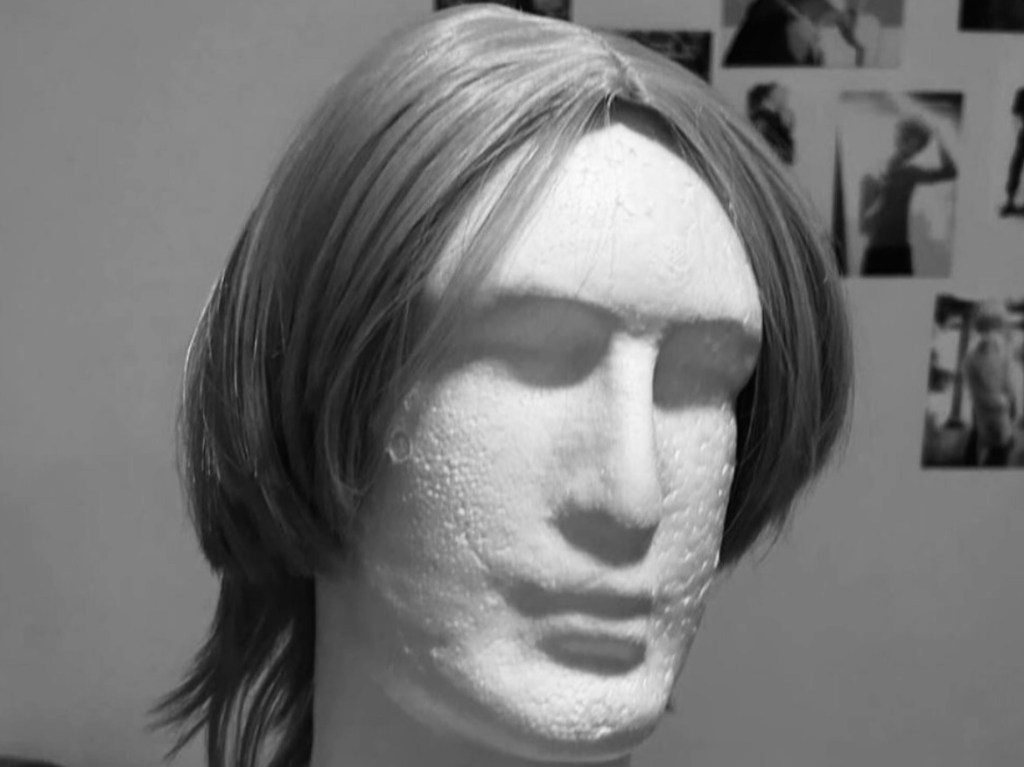
A couple of days ago I changed the avatar on these accounts to this hairdresser’s mannequin that I’d found for sale, and under the new image, Karen Smith wrote:
 I see a deep longing
 A constant view
 Too much, too much
So I wrote back:
      the face of one that’s
 seen much suffering is – ah!
      just polystyrene
Which leads me to the topic of senryū.
In the English language haiku community the word haiku is used to mean a short poem that includes a kigo. A kigo is a seasonal reference word, often a bird, flower, or some other natural phenomenon that is specific to one of the seasons in Japan.
In the English language haiku community the word senryū is used to mean a poem that does not have a kigo and refers, often satirically, to aspects of human nature, so my verse about the polystyrene face would be referred to as senryū.
I myself tend to use the word haiku to refer to all of these short verses. Why?
One thing is that senryū is an unfamiliar word to the wider community and insisting on readers learning a new word that is not in common English usage seems . . . didactic.
Another reason is that I don’t think there is an intuitive way for English speakers to say the word senryū, which may embarrass, and potentially exclude, newcomers to English language haiku. Senryū often seems to be pronounced in two syllables with the “r” silent, “sen-yu”.
I admit however that there are a number of contradictions in this position that I choose to take and I’ll address them in an upcoming post.
Also, I should specify my aversion to using the word senryū extends only to communication intended for the wider community. I think it’s fine to use the word in scholarly articles and books intended specifically for people who already know a lot about haiku.
PS. As mentioned in my previous post Karen Smith’s Bluesky account is @karen-smith.bsky.social.
 Clem Byard